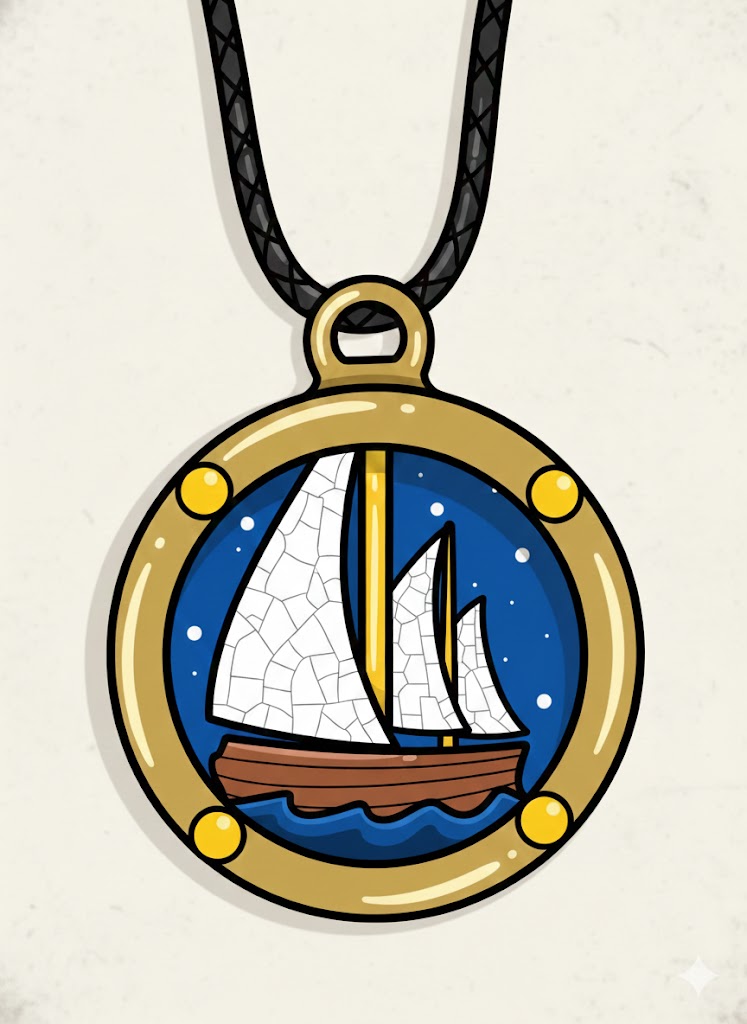
I made a brass medallion. A pendant, really. A little sailboat with enamel sails, sitting in a brass porthole frame with copper waves underneath, hung on a leather cord. And I’m really proud of it.
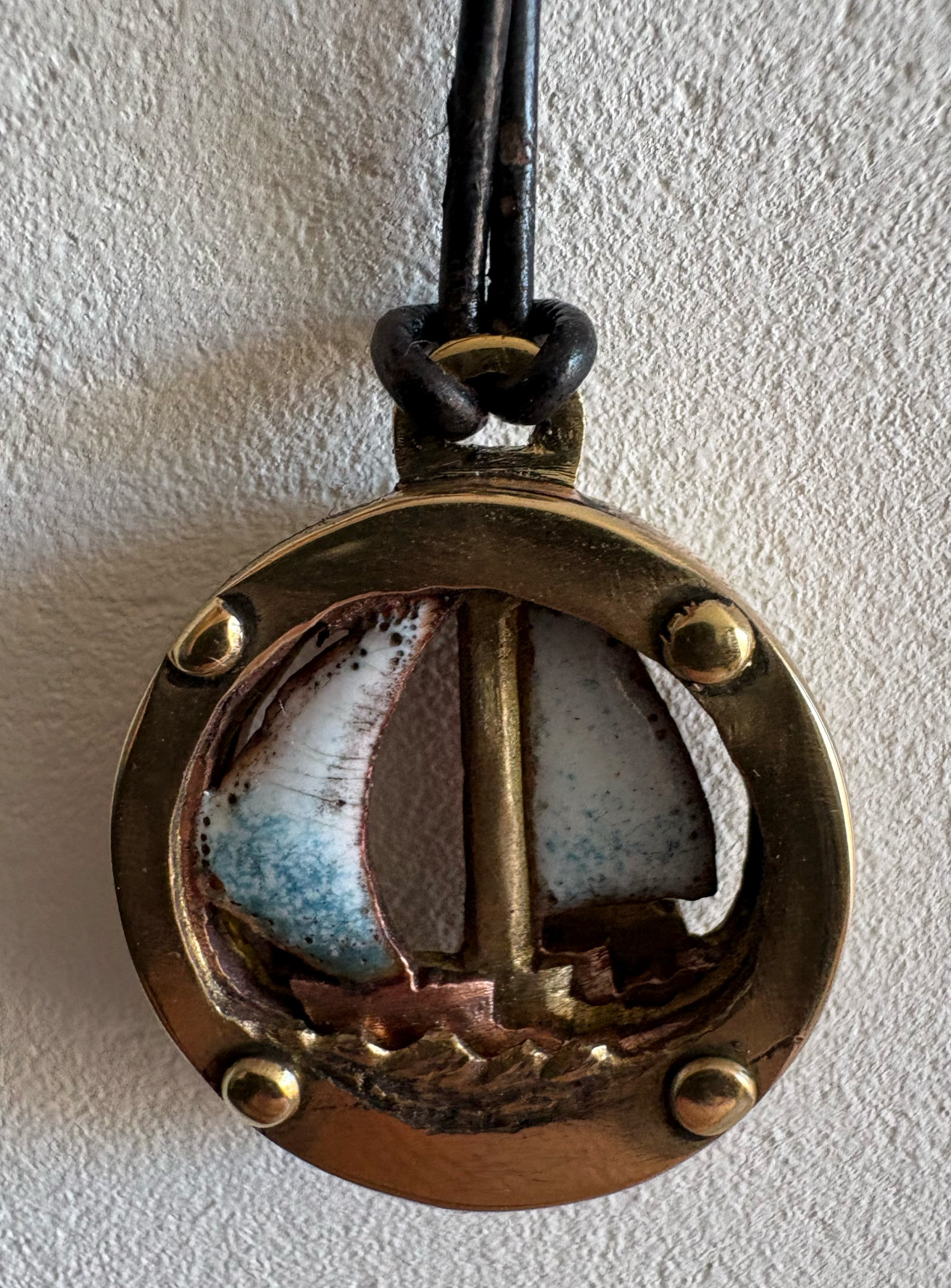
It’s not perfect. I’ll get to that. But I want to start by saying: making this felt really good.
Random acts of creativity
I spend most of my days staring at a computer screen. This is also creative, but it hits different when I actually make something.
I don’t want to get too mystical about this, but making things with my hands is balm for my soul. It’s therapy. It uses a completely different part of my brain than knowledge work. My desk is a mess, covered in scraps of half-finished creative projects (though to be fair my hard drive is also full of half-finished creative projects). I find the creative process fascinating, especially when it’s an actual thing. There’s a form of experimentation and discovery that happens during physically making something that doesn’t really happen when coding. I think because I can’t just undo the mistakes, I have to live with them.
So. Many. Mistakes.
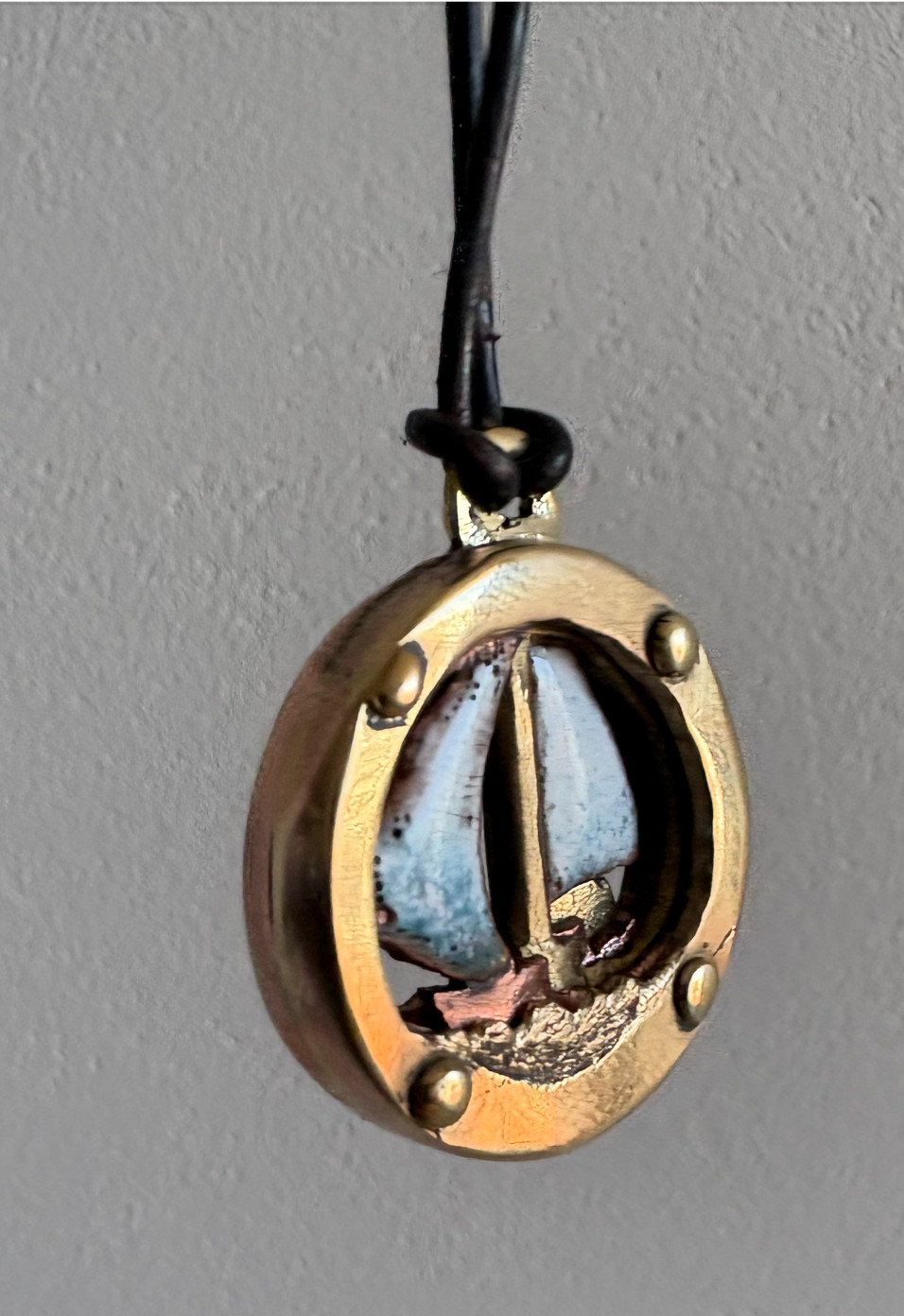
I made so many mistakes making this thing. I always do. Nothing has ever, not once, gone exactly as planned.
I broke three drill bits trying to drill the rivet holes. Three. I learned, eventually, that resting the piece on a solid base really helps when drilling metal. Before that revelation I was basically just vibrating the piece around while a drill bit screamed at me.
The rivet holes I did manage to drill weren’t straight, so the rivets aren’t spaced quite right. One of them had to get half ground away at the end to fit. If you look closely, you can see it. I see it every time I look at the piece. You probably didn’t notice until I pointed it out.
I broke a dozen jeweller’s saw blades piercing the discs. The first few I was trying to force the saw, muscling through the metal. Turns out you’re supposed to let the saw do the work, which is one of those pieces of advice that sounds obvious and means absolutely nothing until you’ve snapped enough blades to understand it physically. Now I’m so gentle with the saw. Practice makes not-so-terrible.
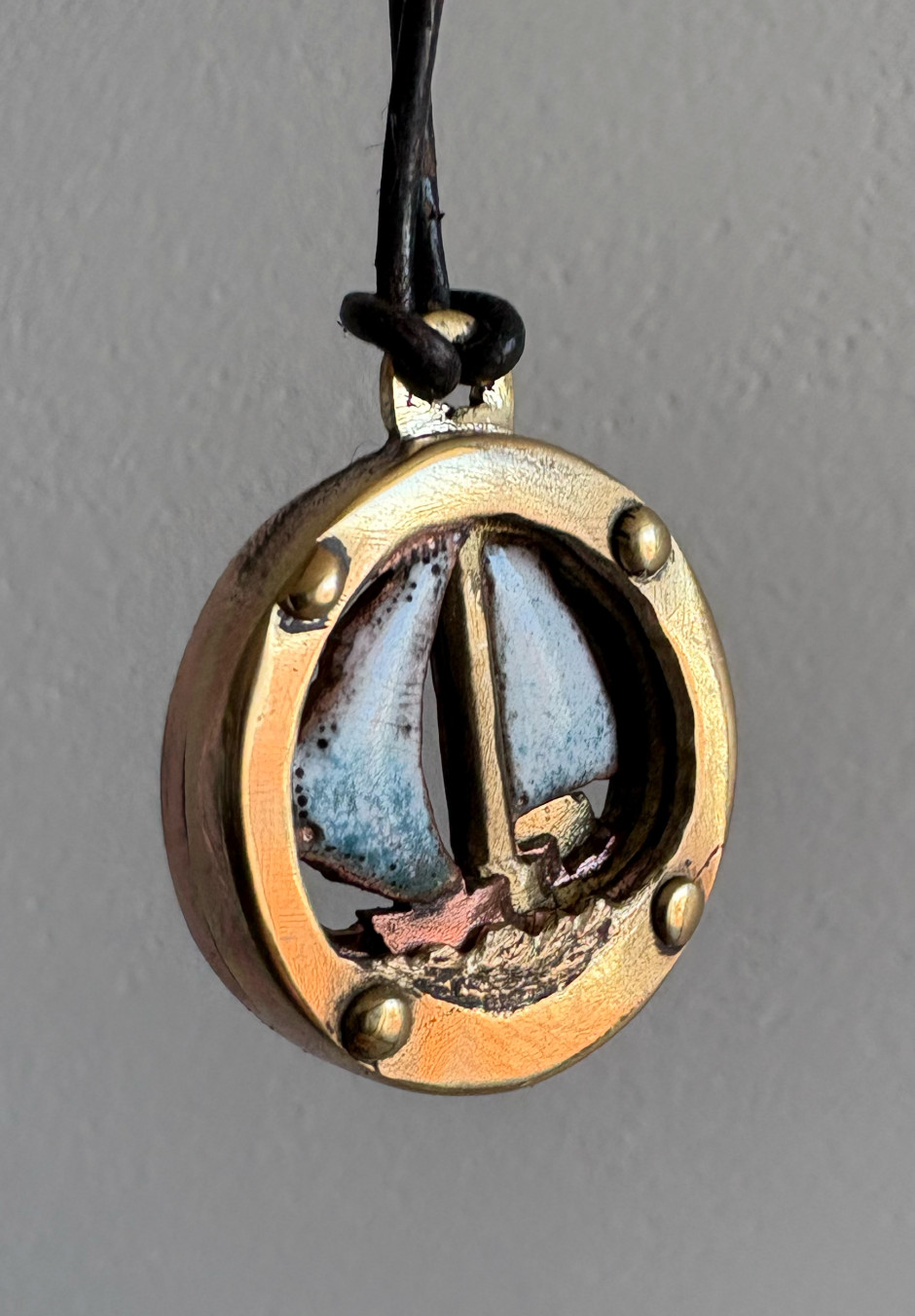
I mixed enamel colours for the first time on this piece. I’m actually quite proud of how well I got the enamel to sit on the surface, but the mixing itself looks messy. The blue was supposed to look like intentional shadowing, like depth in the sails. It looks more like it got dirty. I want to do this again, but better.
Brazing the attachment loop on was a disaster the first time and I had to redo it. Next time I’d clip a piece of brazing wire off and lay it on the piece, then hold the loop steady with a pick while it heats, rather than trying to do everything at once with two hands and needing three. I also ruined a decent pair of tweezers using them instead of a pick.
The inner circles aren’t quite circular. I had to deviate from a true circle to give the rivets enough room, which is a polite way of saying I didn’t plan it well enough and can’t saw a circle without messing it up.
The front waves are too tall, blocking the waves behind them from showing through. And the boat hull was badly executed; the shape is too small to properly read as a hull. I’d make it bigger next time, slanting up from the front to back to go with the waves which would also do the same.
That’s a lot of mistakes for one small piece of brass.
Others just see the result
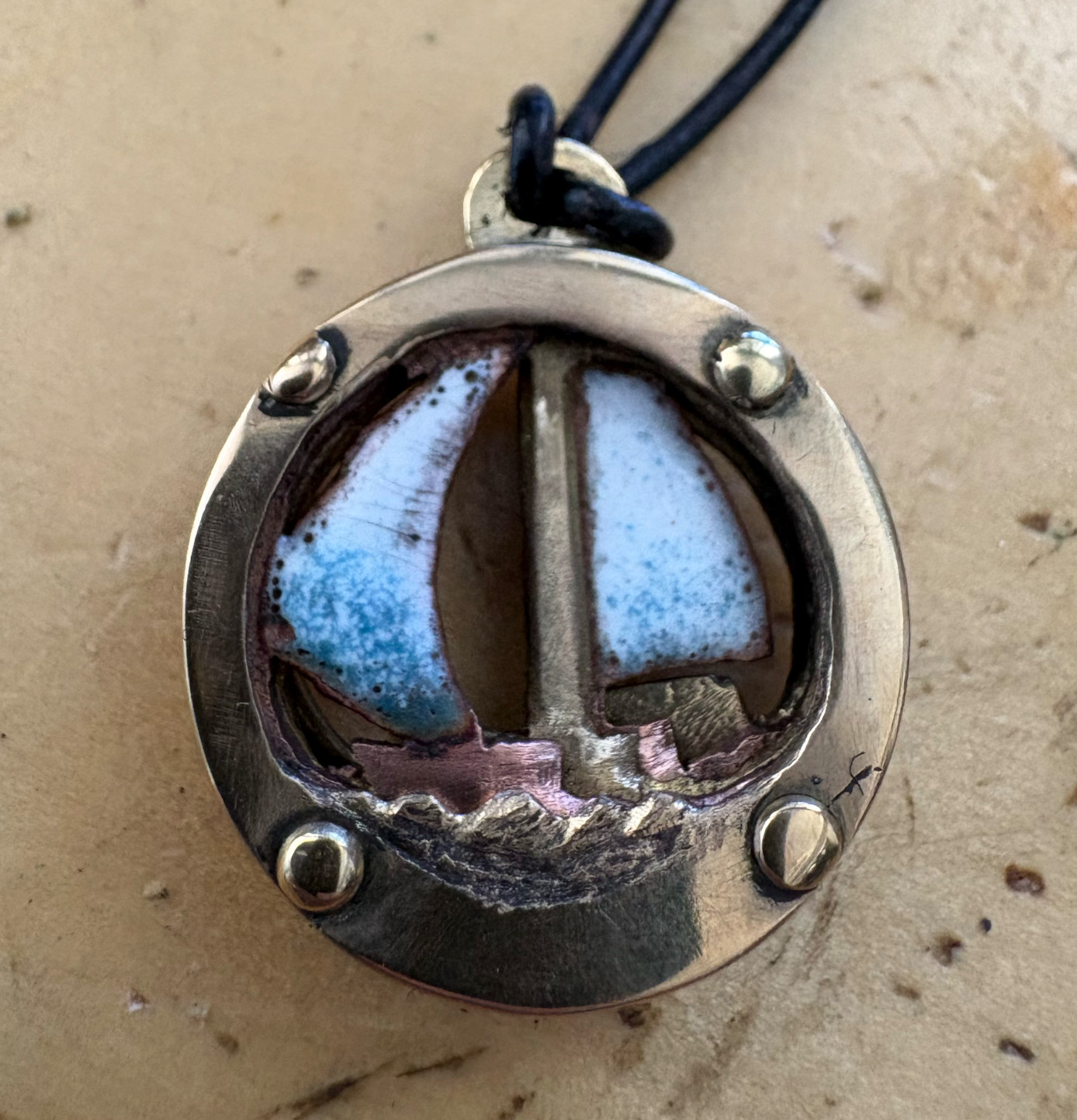
Here’s the thing, though. I showed this pendant to a few people before writing this post. Not one of them noticed any of the problems I just listed. They saw a handmade brass sailboat pendant and thought it looked great.
We are always more critical of our own work than anyone else will be, because we see the process. We see every mistake, every compromise, every place where reality didn’t match the plan. Others just see the result. And the result, honestly, looks pretty good.
This is true of everything, not just metalwork. Every piece of software I’ve shipped has had things in it that made me wince. Every presentation I’ve given has had a bit where I stumbled. Nobody else noticed. Or if they did, they didn’t care, because they were looking at the whole thing, not the seams.
I really need to internalise this more. Other people don’t see the mistakes that I see in my work. And if they do, they really don’t care.
Everything I learned, I learned from getting it wrong
Almost every useful thing I took away from this project came from a mistake. I’m a very hands-on learner, I enjoy experimenting with things and learning “the hard way”. I never learn from reading instructions or watching tutorials, though I probably should have done more of that. I only really learn from doing it wrong and then understanding why. The mistakes aren’t obstacles to learning. They are the way I learn. And yeah, every so often I’ll wreck a project doing it wrong, and have to start again. But those are the best lessons :)
The Cult of Done
I’m a huge fan of the Cult of Done Manifesto by Bre Pettis and Kio Stark. If you haven’t read it, go read it now, it’s short. The bit that matters most to me: “The point of being done is not to finish but to get other things done.”
This pendant is done. It’s imperfect and I can list every flaw. But it’s done, and being done means I can move on. I can take everything I learned from this piece and apply it to the next project. Or maybe do this project again; there’s so much I’d do better if I did this again, and there’s a huge benefit to doing the same thing over and over again. But probably not. The spark has gone, and I’m done.
The point was never the thing I made. The point is that I made the thing.