“If I had asked people what they wanted, they would have said faster horses.”
I’ve had this quoted at me more times than I can count. Pitch nights, mentoring sessions, coffee with founders, conversations with investors who really should know better. It nearly always comes up at the same moment: I’ve asked “have you talked to any customers about this?” and the founder doesn’t want to.
The quote is their get-out-of-jail-free card. Ford didn’t ask customers. Jobs didn’t ask customers. Visionaries don’t ask customers; they build visionary products that no-one could have predicted and yet everyone loves. So I don’t need to either.
Every single one of the people who’ve used it on me to justify not talking to customers has been wrong. Not most of them. All of them. I’ve watched them burn months, sometimes years, building something nobody wanted, when a dozen honest conversations at the start would have told them.
I am not criticising anyone for being in love with their idea, and convinced of a genius that we mere mortals cannot understand. That’s how it should be. But this quote has done more damage to more startups than almost any other piece of business folklore, and I want to kill it dead.
Ford never said it
Start with the obvious: there’s no evidence Henry Ford ever said it. Quote Investigator went looking and came up empty. The first time anyone pinned it on Ford was in 1999, in a cruise industry trade magazine, and the first time anyone quoted it as his actual words was a 2001 letter to Marketing Week. Ford had been dead for over 50 years by then. Which tells you everything you need to know about it.
So the founding myth of “don’t talk to customers” first shows up as a Ford quote in a marketing magazine. Colour me flabbergasted.
And the irony runs deeper than that. Ford’s real attitude to customers is on the record, in his own book: “Any customer can have a car painted any colour that he wants so long as it is black.” He built the Model T, decided he knew best, and refused to change it. Meanwhile General Motors started actually paying attention to what people wanted: colours, model years, a range of prices, buying on credit. Ford went from selling over half the cars in America to watching GM overtake him, and had to shut down his factories for months in 1927 to retool for the Model A.
If Ford is who you’re paying attention to for this, he’s a cautionary tale, not a role model.
The ways it gets misread
Even if we pretend Ford said it, the quote gets twisted into at least three different lessons, all of them wrong.
“Don’t talk to customers.” This is the big one, the one I hear most. The quote doesn’t say that. The fictional Ford asked. He just didn’t do exactly what they said. Those are very different things.
“Visionaries know best.” The lone genius who sees what the masses can’t. It’s a lovely story, and it’s survivorship bias pure and simple. For every founder who ignored the market and won, there are thousands who ignored their customers and lost, and we never hear about them. Going with your gut because Ford (didn’t) is like taking up the lottery because someone you read about won.
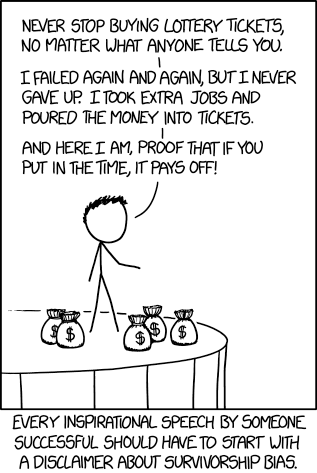
xkcd #1827, “Survivorship Bias”, by Randall Munroe (CC BY-NC 2.5)
“The customer is wrong.” Customers don’t know what they want, so their opinions don’t matter. This one usually comes paired with the Steve Jobs line about people not knowing what they want until you show it to them. Which conveniently ignores that Apple did plenty of research, and that Jobs had a long list of products nobody wanted either (anyone remember the Lisa? The iPod Hi-Fi? The Cube?).
All three readings have the same convenient outcome: the founder gets to skip the uncomfortable, ego-bruising work of finding out whether anyone actually cares about their idea.
What the quote actually says
Read it straight and it’s making a pretty reasonable point: customers are excellent at telling you about their problems and lousy at designing solutions.
“I want a faster horse” is a customer describing their problem in the only terms they have. They want to get places faster. They know horses, so they describe the solution as a better horse. The job of the founder is to hear “faster” and not get hung up on “horse”.
That’s not an argument against talking to customers. It’s an instruction manual for how to do it. Ask about their problems, their frustrations, what they’ve tried, what it costs them. Don’t ask them to design your product. Listen for the problem underneath. Don’t sell them your solution. Basically everything The Mom Test talks about.
Every decent customer discovery method I know says exactly this. You don’t ask “would you buy this?” (they’ll always say yes because the alternative is an awkward conversation). You ask them “tell me about the last time this was a problem for you” and then you shut up and listen to them. Then, when you’ve built your solution, you go back to them using the exact language they used to describe their problem.
The customers in the quote told the fictional Ford precisely what he needed to know. That’s the whole point of the story, and somehow the people quoting it deliberately misinterpret it.
The customers were right
The folks Ford (never actually) talked to were right. A much better answer to their problem wasn’t the fucking motor vehicle. It was faster horses.
Yesterday was the World Day of Remembrance for Road Traffic Victims. It’s been held on the third Sunday of November since 1993, and the UN made it official in 2005. We need an annual day to mourn the millions and millions of people killed by the monstrosity Ford made affordable.
Look at what the car actually gave us. The WHO puts global road deaths at about 1.16 million people a year. That’s more than 3,000 people a day, every day. It’s the leading cause of death for children and young people between 5 and 29. Transport is nearly a quarter of all the energy-related CO2 we pump out, and road vehicles are about three-quarters of that. We bulldozed neighbourhoods for freeways, paved over vast chunks of every city for parking, and built suburbs that are impossible to live in without owning a car. The car industry literally invented the crime of “jaywalking” in the 1920s to push pedestrians off streets they’d been using for thousands of years.
Nobody asked for any of that. They asked to go faster.
Now, horses were not some idyllic solution. Cities in 1900 were knee-deep in manure, dead horses were left in the street, and horses killed plenty of people too. I’m not romanticising them. But think about what “a faster horse” means as a spec:
- Faster than what we’ve got now
- Something one person can use to get themselves around
- Fits on the streets we already have
- Doesn’t need a whole new set of infrastructure to run
- Won’t kill you, or anyone else, if you’re a bit careless with it
That’s what people wanted. It’s a description of a human-scale vehicle that gets you around faster without rebuilding the entire world around it.
And we had it. Kinda. The bicycle boom happened in the 1890s, before cars took off. Cyclists were the people who lobbied for paved roads in the first place. Then the car turned up, took the roads they’d campaigned for, and pushed them off for the next century.
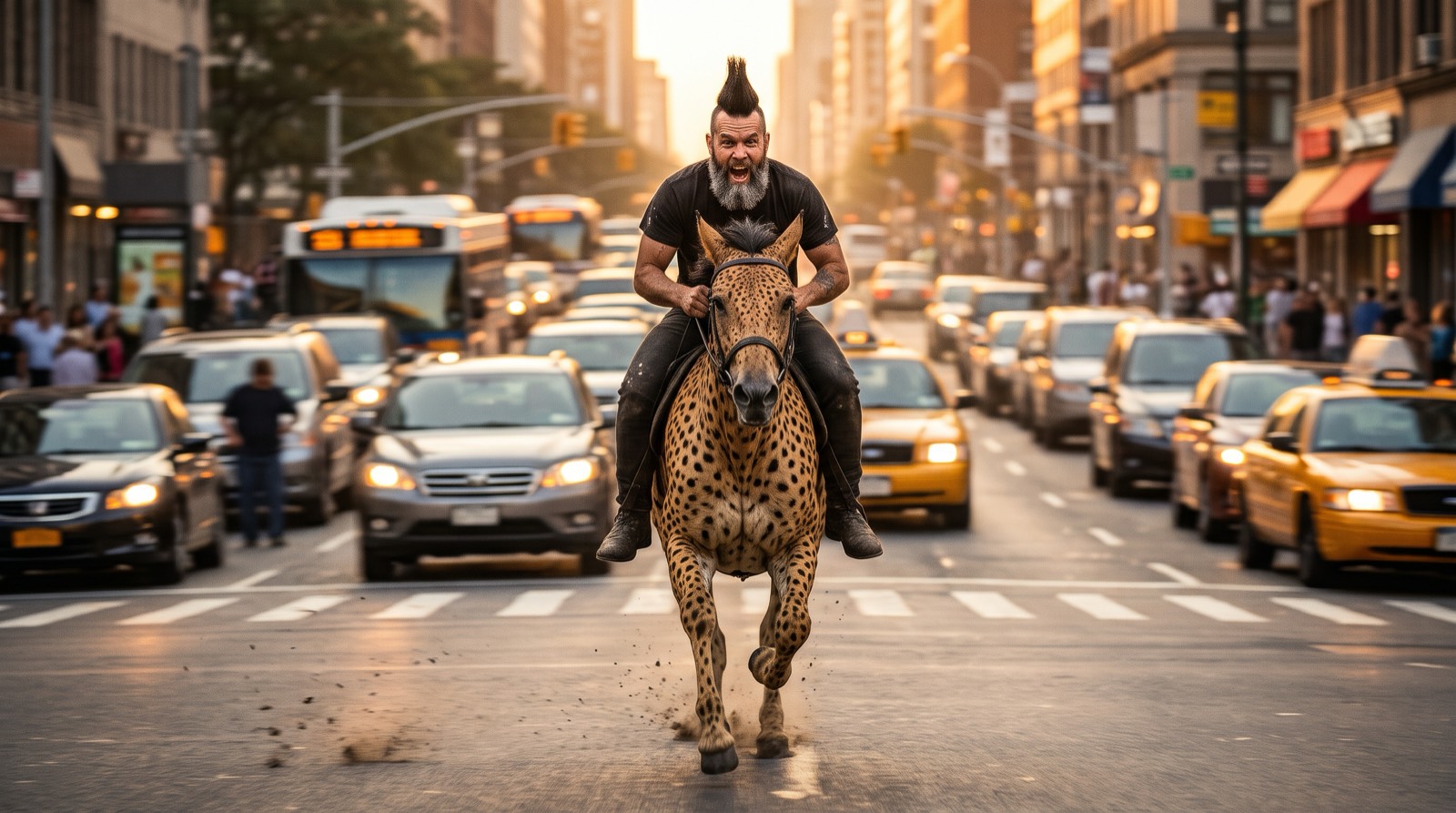
But let’s imagine a world where horse breeders got together with geneticists and magicians, and created a faster horse. Crossbreed it with a cheetah and it can get to 90 km/h on a sprint, maintain 20 km/h for hours, all that. Let’s just pretend that’s possible and indulge our fantasy. What kind of world would that be now? I think, personally, a better one. Though I know it’s a fantasy and we’d have a whole different set of problems because of the weird horse-cheetah hybrids and their bizarre genetics.
The “visionary” answer was the car. The customer answer was the faster horse. The customers were right. If we’d built what they asked for, we’d have fewer dead people, less pollution, less climate change, and better cities. Better everything, frankly.
So talk to your customers
The visionary got rich, sure. At our expense. The rest of us have spent a century paying for the problems the visionary created and nobody asked for, and we’re still paying. 3,000 people paid the highest possible price for it today. And will again tomorrow. And the day after. This was not a good solution.
Which is the real lesson of the quote: the customers understood their own problem better than the genius did. But the genius was in love with his own idea and didn’t fucking listen to them.
So next time someone quotes this at you to explain why they haven’t spoken to a single customer, tell them the customers were right.
Then go and ask yours what they want. If they say faster horses, go find some way of making horses go faster.
Sources
- Quote Investigator, “My Customers Would Have Asked For a Faster Horse”
- Henry Ford, My Life and Work (1922), source of the “any colour so long as it is black” line
- Rob Fitzpatrick, The Mom Test (2013)
- Randall Munroe, xkcd #1827: Survivorship Bias
- World Health Organization, Road traffic injuries fact sheet
- World Day of Remembrance for Road Traffic Victims
- International Energy Agency, Transport, Energy and CO2
- Our World in Data, CO2 emissions from transport
- Peter D. Norton, Fighting Traffic: The Dawn of the Motor Age in the American City (MIT Press, 2008), on the invention of jaywalking
- Carlton Reid, Roads Were Not Built for Cars (Island Press, 2015), on cyclists and the Good Roads movement